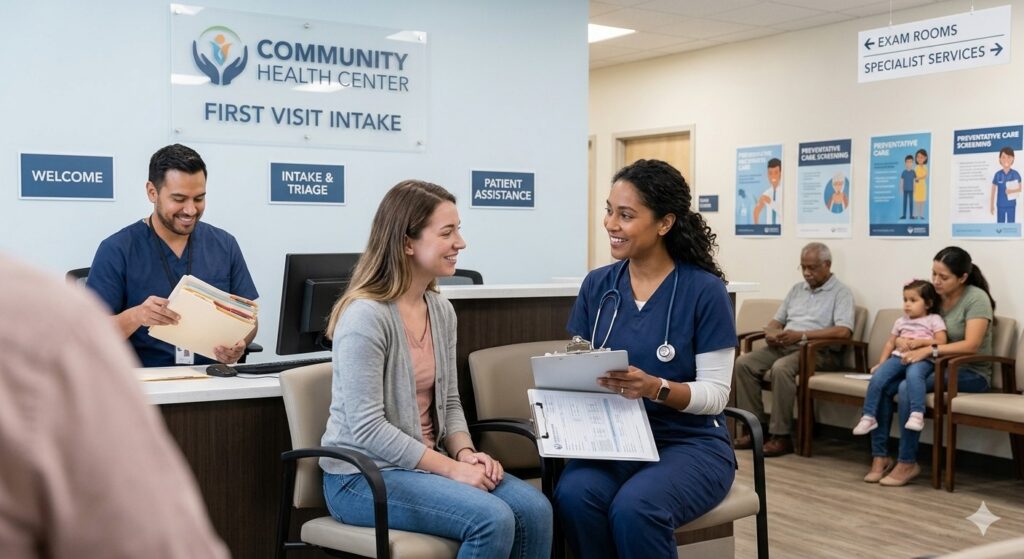
The feeling before the first visit
If you’ve never been to a community health center before, the first visit can feel like a big unknown. Will they judge me for not having insurance? Will I understand the paperwork? Will the doctor actually listen? These are normal questions. They’re the same questions most new patients have, and the staff at a good community health center know exactly how to answer them.
This article walks you through a typical first visit from the moment you pick up the phone to the moment you leave. It’s meant to remove the surprise and give you a clear picture of what to expect.
Step 1: Making the appointment
Most community health centers let you schedule by phone, through an online portal, or in person. The phone call is the most common way, especially for new patients. When you call, the scheduler will ask:
- Your name, date of birth, and contact information
- Whether you have insurance, and if so, what kind
- What kind of visit you need (primary care, dental, mental health, prenatal, etc.)
- A brief description of your concern, so they can schedule enough time
- Your preferred language, so they can arrange an interpreter if needed
The scheduler will then tell you when the next available appointment is and walk you through what to bring.
New patient visits are often longer than follow-up visits, typically 45 to 60 minutes, because the provider needs time to learn your full history.
Step 2: What to bring
Come prepared with these items. If you don’t have all of them, bring what you can and call ahead to let the staff know.
- A photo ID if you have one
- Proof of income for the last month (pay stub, tax return, or a written statement if you have no income)
- Proof of address (a utility bill, piece of mail, or lease)
- Your insurance card, if you have one
- A list of all medications you take, including over-the-counter drugs, vitamins, and supplements
- A list of any allergies, including medication allergies
- Names and contact info for other doctors or hospitals you’ve been to recently
- A written list of your concerns, in the order of what worries you most
That last item matters more than people realize. In a busy clinic, it’s easy to forget what you came in for, especially when you’re nervous. A short written list keeps the visit focused on you.
Step 3: Arriving at the center
Plan to arrive about 15 to 20 minutes before your appointment. The front desk will greet you, confirm your appointment, and give you a stack of intake forms to fill out. These usually cover:
- Contact and household information
- Health history (past illnesses, surgeries, family history)
- Insurance or sliding scale eligibility
- Consent forms for care and for how your information is shared
- A privacy notice explaining your rights under HIPAA
If you need help filling out the forms, ask. Every community health center has staff who can help you in person, and many have bilingual staff who can translate. You have the right to an interpreter if you need one, at no cost, under federal law.
Step 4: The intake with a medical assistant
Once you’re called back, a medical assistant or nurse will take your vital signs: blood pressure, heart rate, temperature, weight, and height. They’ll ask a few questions about why you’re there, your current medications, and any allergies. This usually takes 5 to 10 minutes.
This is also the moment to mention any concerns you didn’t put on the intake form. The medical assistant will add notes to your chart that the provider will read before coming in.
Step 5: Meeting your provider
Next, your provider will come in. This could be a doctor, a nurse practitioner, or a physician assistant. All three are licensed to provide primary care, prescribe medication, and order tests. In a community health center, which provider you see depends on the staffing and the nature of your visit.
A good first visit with a new provider usually includes:
- A review of your health history
- A conversation about why you came in today
- A physical exam appropriate to your concern
- An explanation of what the provider thinks is going on
- A plan, which may include medications, tests, referrals, or lifestyle changes
- Time for your questions
If you don’t understand something, say so. It is the provider’s job to explain things in language that makes sense to you. If they use a word you don’t know, ask them to put it in plain terms.
Step 6: Lab work, referrals, or follow-ups
Depending on what you came in for, the provider may order blood work, take a urine sample, send you for imaging, or refer you to a specialist. Many community health centers can do basic lab work on-site, which means you don’t have to go anywhere else.
If a referral is needed, ask these two questions:
- Where will the specialist visit happen, and is there a sliding scale or low-cost option?
- Do you have a care coordinator or patient navigator who can help me set it up?
Many community health centers have care coordinators whose whole job is to help patients navigate specialists, labs, and outside care.
Step 7: Checkout and follow-up
At checkout, the front desk will go over what you owe, schedule your follow-up if needed, and give you a printed summary of the visit. The summary is called a visit summary or after-visit summary, and it typically includes:
- The provider’s findings
- Any new prescriptions and how to take them
- Tests ordered and how to get results
- Instructions for self-care at home
- When to come back
Keep this summary. If a question comes up later, it’s the easiest way to remember what was said.
A note on privacy
Community health centers are held to the same privacy standards as any hospital. Your health information is protected under a federal law called HIPAA, which means staff can only share it with people who are directly involved in your care, unless you give written permission otherwise.
If you’re undocumented, it’s worth knowing: community health centers do not share patient information with immigration authorities. They don’t ask about your immigration status in order to give you care. Your records are private.
After the visit
In the next day or two, you’ll often get a phone call or text from the clinic to see how you’re doing, especially if you were started on a new medication or had a significant health issue. This is a normal part of care at community health centers and something most private clinics don’t offer.
If something feels wrong after the visit, call the center. Most have a nurse line you can reach during business hours, and many have an after-hours number for urgent questions.